
ronunciation: ah-MEL-oh-JEN-eh-sis im-per-FEK-tah
Definition
Amelogenesis imperfecta is a rare genetic condition where tooth enamel does not form properly. It affects both baby teeth and permanent teeth, and it is present from birth. The enamel may come in too thin, too soft, or not at all, leaving teeth weak, discolored, and vulnerable to damage.
What Is Actually Happening
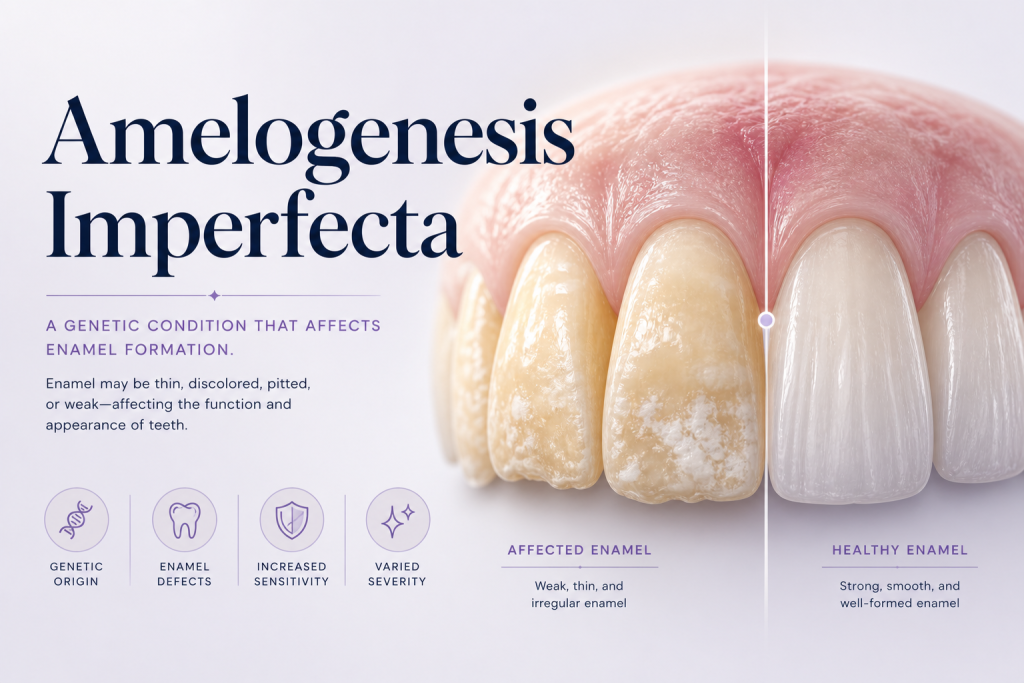
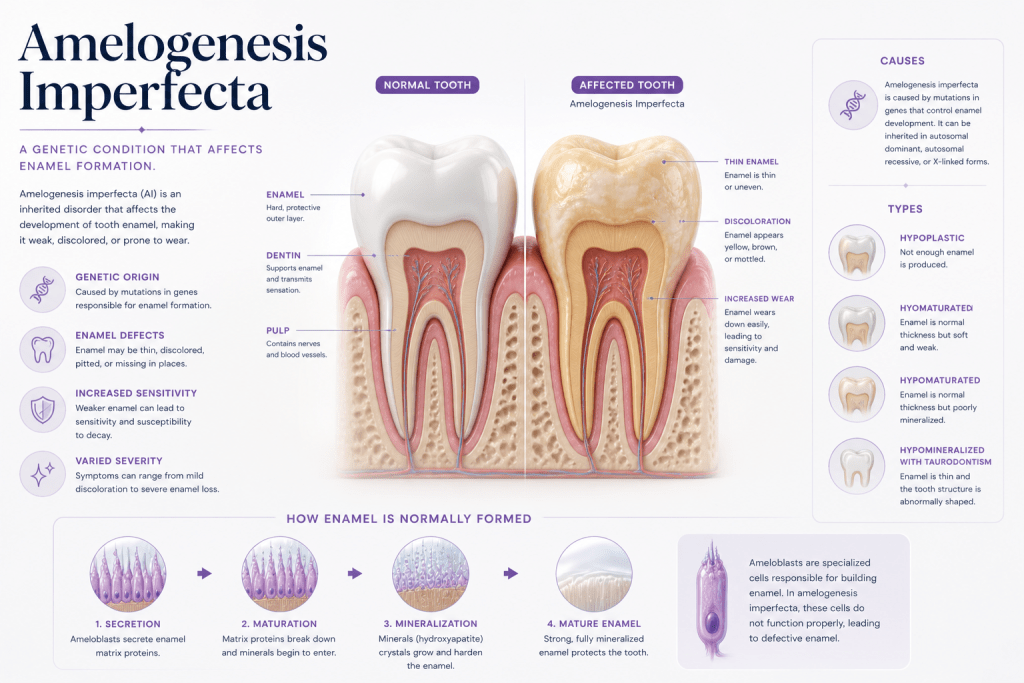
Normally, ameloblasts build enamel in a precise, layered process called amelogenesis. With amelogenesis imperfecta, mutations in the genes that control this process disrupt the work of those cells. The result is enamel that either never reaches its full thickness, never fully hardens, or breaks down quickly after the tooth erupts.
This is not caused by diet, poor brushing habits, or anything a parent or child did wrong. It is inherited, meaning it is passed down through families, though in some cases the gene mutation can occur on its own with no family history.
The Four Types
There are four recognized types of amelogenesis imperfecta, each reflecting a different stage where enamel development went wrong.
Hypoplastic
The enamel is thinner than normal and may have pits, grooves, or missing patches. The enamel that is present is actually hard, but there is not enough of it.
Hypocalcified
The enamel forms at normal thickness but never hardens properly. It is soft and chalky and wears away very quickly after the tooth comes in.
Hypomaturation
The enamel forms but does not fully mature or crystallize. Teeth may look mottled, creamy white, or yellow-brown and can chip easily.
Hypomaturation with Taurodontism
A specific form where the enamel defect occurs alongside taurodontism, a condition where the tooth has an enlarged body and shorter roots.
What It Looks Like
Teeth affected by amelogenesis imperfecta often appear yellow, brown, or gray. They may look smaller than normal, feel rough or pitted, and break or wear down faster than healthy teeth. Sensitivity is common because the thin or soft enamel leaves the underlying dentin exposed. Some people experience pain just from brushing.
The emotional and social impact of this condition is real. Because the changes are visible in the smile, many people with amelogenesis imperfecta deal with self-consciousness, reduced confidence, and in some cases social avoidance.
As a Dental Hygienist of 20 years this is a condition that has been a rare in my career. The Dentist has to diagnose this condition and in many cases people already know that they have Amelogenesis Imperfecta by the time they are adults.