
Anodontia is a rare genetic condition where a person is born without any teeth. The word comes from the Greek prefix “an” meaning without, and “odont” meaning tooth. Someone with anodontia never develops teeth at all, either their baby teeth, their adult teeth, or sometimes both. This is different from losing a tooth because of a cavity or an injury. With anodontia, the teeth simply never form in the first place. Anodontia is considered a form of a larger group of conditions called tooth agenesis, which is a medical way of saying teeth that were never developed. There are a few related terms you might hear

Hypodontia
means a person is missing one to six teeth.

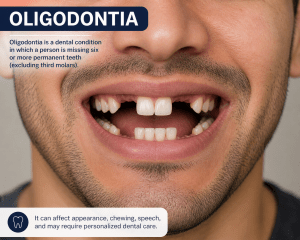
Oligodontia
means a person is missing six or more teeth.
Complete anodontia means no teeth developed at all.
Anodontia is most often connected to a condition called ectodermal dysplasia, which is a group of genetic disorders that affect how the teeth, hair, nails, and sweat glands develop. So sometimes a person with anodontia may also notice differences in those other areas of their body too.
Because the condition is genetic, it is passed down through families. Both parents would need to carry the gene change for a child to develop complete anodontia. A dentist or pediatrician may start to suspect anodontia if a child has not grown any baby teeth by around 13 months of age. A dental X-ray can confirm it by showing whether teeth are forming under the gums or not.
People with anodontia can have a hard time chewing food, speaking clearly, and keeping the jawbone growing the way it should. Without teeth to stimulate the jaw, bone loss can happen over time. The good news is that anodontia is treatable. Dentists work with patients to restore function and appearance using:
There are options for patients with this condition and as a Dental Hygienist for 20 years I have seen smiles restored and people’s lives changed in a positive way.