
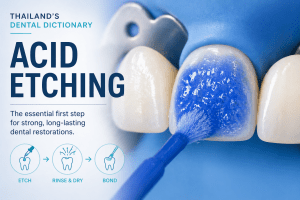
In dentistry, acid etching is a preparatory technique used to create a micro-retentive surface on tooth enamel. When a mild phosphoric acid (typically 35 to 40 percent concentration) is applied to the enamel for about 15 to 30 seconds, it dissolves the outer layer of mineralized tooth structure.
What does it do?
This creates tiny microscopic pits and irregularities on the enamel surface that increase surface area and allow dental bonding materials, sealants, and composite resins to mechanically lock onto the tooth. The process is essential in modern adhesive dentistry because it significantly improves the retention and
longevity of restorations.
As a Dental Hygienist we use this before applying sealants. The dentist also uses acid etch for their fillings and they actually have different types that they use in the mouth and some that is used only outside of the mouth.

What happens after etching
After etching, the tooth surface is thoroughly rinsed and dried, and then bonding agent is applied before placing the final restoration. Acid etching is considered one of the most important innovations in restorative dentistry because of how dramatically it improved the durability and reliability of tooth colored fillings and bonded restorations.