
Your tongue does a lot more than help you taste your favorite foods. It actually gives clues about what is going on inside your body and has something to say about you. As a dental hygienist I look at tongues all the time, and it can paint a picture of your oral and overall health. Here are 7 types of tongue appearances and what they might mean. If you notice anything in your mouth or tongue never hesitate to speak to your dentist.
Coated Tongue

A coated tongue looks like it has a white, yellow, or even brown coating sitting on top of it. Think of it like a fuzzy blanket covering your tongue.This coating is usually made up of bacteria, dead cells, and tiny pieces of food that build up on the surface. It can happen when you are not drinking enough water, when you are sick, or when you are not cleaning your tongue regularly. It is so important to clean your tongue daily and scrape away all that bad bacteria that causes bad breath.
Geographic Tongue
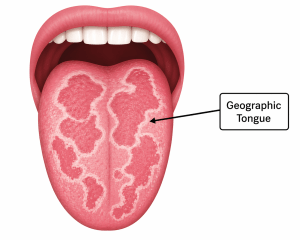
Geographic tongue gets its name because it looks like a map. The pattern can also change from time to time. Here is a fun long name for a geographic tongue: Benign Migratory Glossitis. That was a fun anyway the geographic tongue has smooth, reddish patches surrounded by white or light colored borders. One day the patch might be in one spot, and a week later it moves somewhere else. It sounds scary but geographic tongue is actually very common and not dangerous. Some people never even know they have it. Other people say they notice a slight burning sensation when eating spicy or acidic foods.
Scalloped Tongue

A scalloped tongue has wavy, rippled edges that look like someone pressed the sides of the tongue against the teeth for a long time. That is actually exactly what happens. As a Dental Hygienist I see this often.
When the tongue is too large for the mouth, or when someone clenches and grinds their teeth, the tongue gets pushed against the teeth and leaves those scalloped marks around the edges.
A scalloped tongue can be linked to teeth grinding (called bruxism), sleep apnea, the bite being off a (malocclusion) or even thyroid issues. If you notice this on your tongue make sure you tell your dentist.
Smooth Tongue

Most tongues have tiny bumps on them called papillae. These bumps help with taste and texture. A smooth tongue is one where those bumps have worn away or gone missing, leaving the surface looking very flat and shiny. This can happen because of nutritional deficiencies, especially low levels of iron, vitamin B12, or folate. It can also be related to certain medications or conditions like celiac disease.
If your tongue has lost its texture and looks unusually smooth, it is a good idea to talk to your doctor and your dentist because your body might be missing something it needs.
Strawberry Tongue

A strawberry tongue is bright red, swollen, and bumpy, making it look just like a strawberry fruit. It is one of the easier tongue types to recognize. This appearance is often seen with infections like strep throat or a condition called scarlet fever, especially in kids. It can also show up with Kawasaki disease, which is a condition that affects young children and causes inflammation throughout the body. A strawberry tongue is usually a sign that something needs medical attention.
A Fissured Tongue

A fissured tongue has deep grooves and cracks running along the surface. Some people have just a few small cracks, while others have a tongue that looks deeply split down the middle with grooves on the sides as well. This is actually one of the most common tongue variations out there. Many people are born with it and never even notice. The cracks themselves are not painful, but food and bacteria can collect inside them if you are not cleaning your tongue properly. Fun fact: “Fissured tongue tends to run in families and may also be connected to geographic tongue.” It is considered a normal variation but good tongue hygiene is extra important if you have one.
Hairy Tongue

Despite how it sounds, a hairy tongue does not actually grow hair. The papillae on the tongue can sometimes grow very long and start to trap bacteria, dead cells, and even pigment from foods and drinks. When this happens, the tongue can look dark, brownish, or almost black and the texture can look fuzzy or hair-like. This is more common in people who smoke, drink a lot of coffee or tea, use certain antibiotics, or have dry mouth. It might look alarming, but hairy tongue is usually harmless and goes away once the cause is removed and tongue cleaning is added to the daily routine.
The Takeaway
Your tongue is one of the most honest parts of your mouth. It can quietly tell your dental hygienist or doctor things that your words never would. Taking just a few seconds to look at your tongue in the mirror and brushing it daily is a simple habit that can make a real difference.
If something looks unusual call your Dentist!
Check out more about your oral health and hygiene here:
You’re Doing Your Oral Care Routine in the Wrong Order.
